
 Written by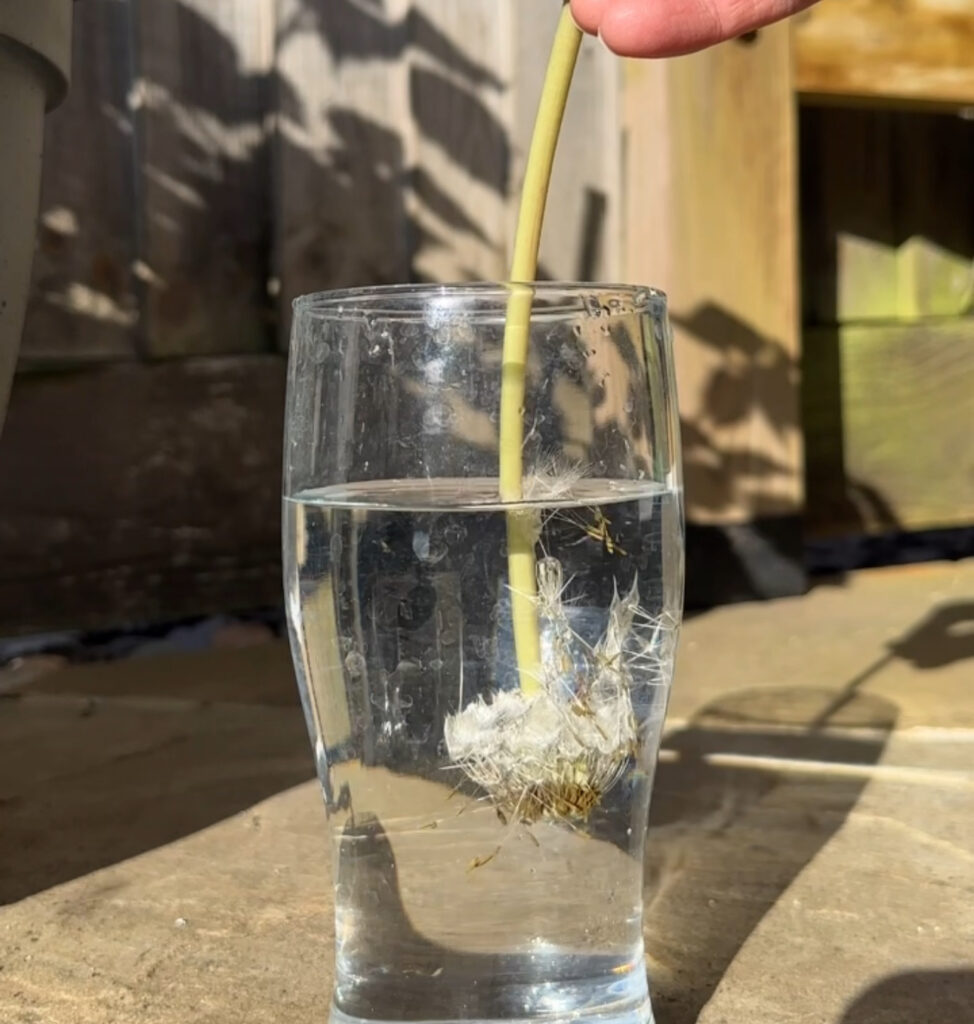
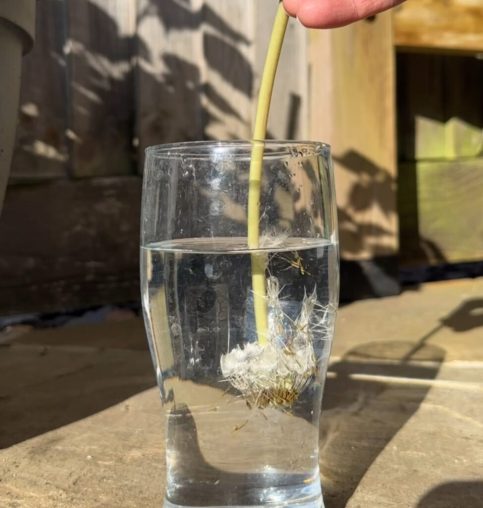
Submerging a dandelion in water always looks impressive, as the delicate puffball (seed head) appears wet in the water but is completely dry when removed. It’s a bit like a super high-tech rain coat.
Several factors contribute to the waterproof properties of a dandelion seed head.
- Dandelion seeds are covered in tiny hairs called pappus, which are hydrophobic (water-hating). Water’s surface tension means it can’t penetrate the tiny gaps between the hairs.
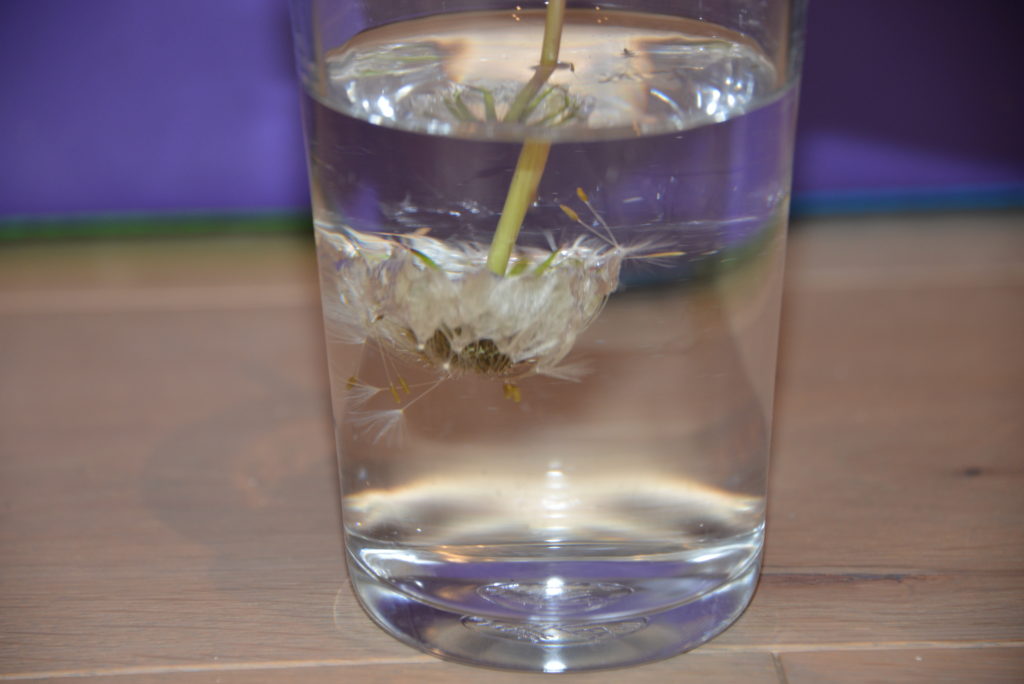
- A thin layer of air ( plastron ) becomes trapped around the seeds, creating a silvery looking bubble. The air pushes back against the water, keeping the seeds dry.
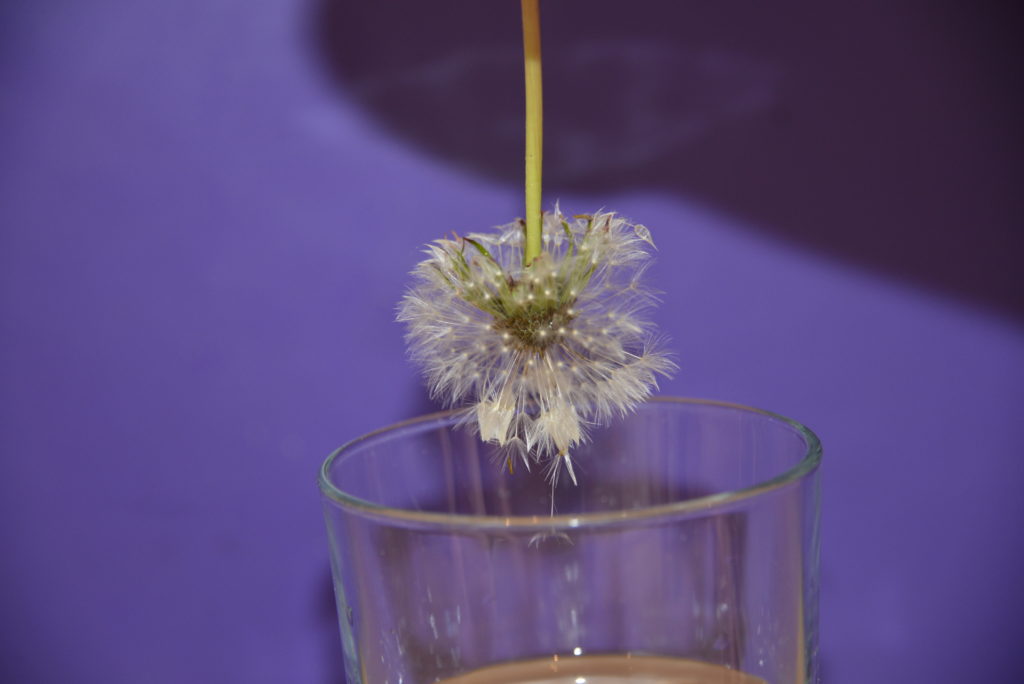
This investigation uses dish soap ( washing up liquid ) to disrupt the surface tension of water to discover how it affects the waterproof properties of a dandelion puffball.
Dandelion and Surface Tension Investigation
You’ll need
- Dandelion seed heads ( as fresh as possible )
- Glass or jar
- Water
- Dish soap ( washing up liquid )
Instructions
Fill the glass or jar about ¾ full of water.
Gently submerge one of the dandelion seed heads into the glass of water and pull it back out. You should find the seed head looks dry!
Add a little dish soap to the water and stir.
Submerge the dandelion again. You should find it gets wet and falls apart.
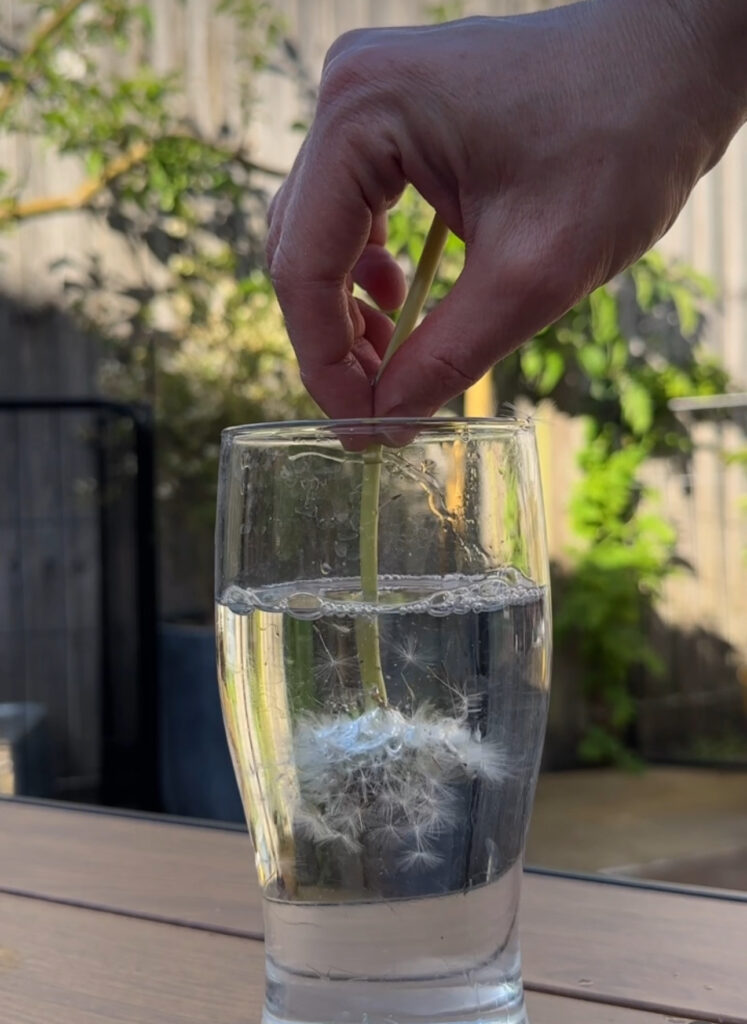
The layer of air doesn’t just keep the dandelion seeds dry. It allows them to float on top of water, so if they fall into a puddle, they don’t just sink.
Why are dandelions waterproof?
You probably noticed that when the dandelion was dunked in water, it looked like it had a silver coating. This is caused by a thin layer of trapped air. The bristles of the parachutes (pappus) repel water, and because they are so closely packed, they hold onto a bubble of air, preventing water from getting inside. When the dandelion is pulled out of the water, it’s completely dry as the water only came into contact with the air bubble around the bristles.
A second factor is that the high surface tension of water creates a ‘skin’ that doesn’t allow it to bend around the tightly packed dandelion bristles. When dish soap (washing-up liquid) is added, the water’s surface tension breaks, and it slides past the trapped air to reach the dandelion bristles. The shield of air collapses, and the bristles clump together.
Last Updated on April 22, 2026 by Emma Vanstone
The post Dandelion, Water and Surface Tension Investigation appeared first on Science Experiments for Kids.
Science Experiments for Kids Read More