
 Written by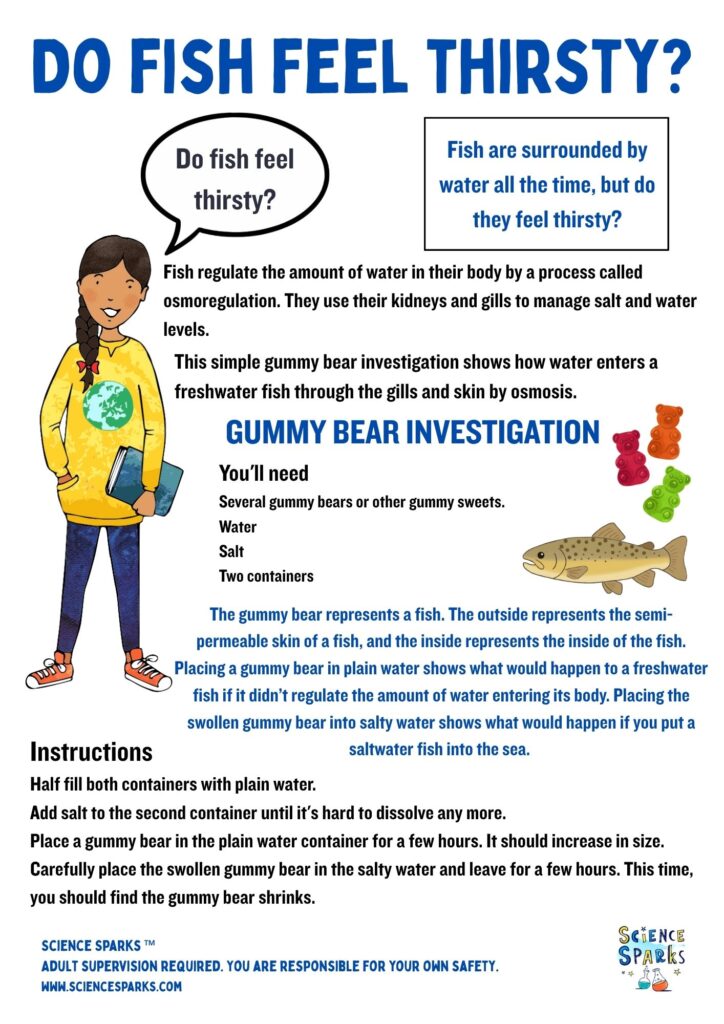
Fish live in water, but do they feel thirsty, and how do they drink water safely if they live in the sea?
Of course, we don’t know what a fish actually feels, but they do need water to stay alive.
Fish take on water either by drinking or absorbing water through the skin and gills by osmosis.
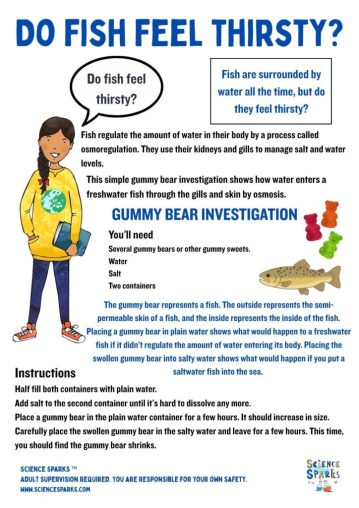
Fish regulate the amount of water in their body by a process called osmoregulation. They use their kidneys and gills to manage salt and water levels.
To understand how fish stay hydrated, you need to understand a concept called osmosis. Osmosis is the movement of water from an area of high concentration ( of water ) to an area of low concentration. This means the needs of fish living in salt water and fish living in freshwater are very different.
Freshwater fish
Fish living in freshwater don’t actively drink. Their blood and tissues have a higher salt concentration than the freshwater they live in, so they need to prevent themselves from taking on too much water.
The kidneys of a freshwater fish constantly remove water from the blood to produce dilute urine, which is almost constantly expelled, while the gills have specialised salt cells that pump salt back into the fish’s body.
Saltwater fish
Saltwater fish have a different challenge. The ocean is saltier than their insides, so they need to keep too much salt out of their body. Unlike freshwater fish, saltwater fish drink constantly. to cope with all the salt, their gills contain cells that pump excess salt back into the sea, and their kidneys produce only small amounts of concentrated urine, so they conserve as much freshwater as possible.
Gummy Bear Osmosis Experiment
To help explain omoregulation, you can use the classic gummy bear osmosis experiment.
The gummy bear represents a fish. The outside represents the semi-permeable skin of a fish, and the inside represents the inside of the fish.
You’ll need
Several gummy bears or other gummy sweets.
Water
Salt
Two containers
Instructions
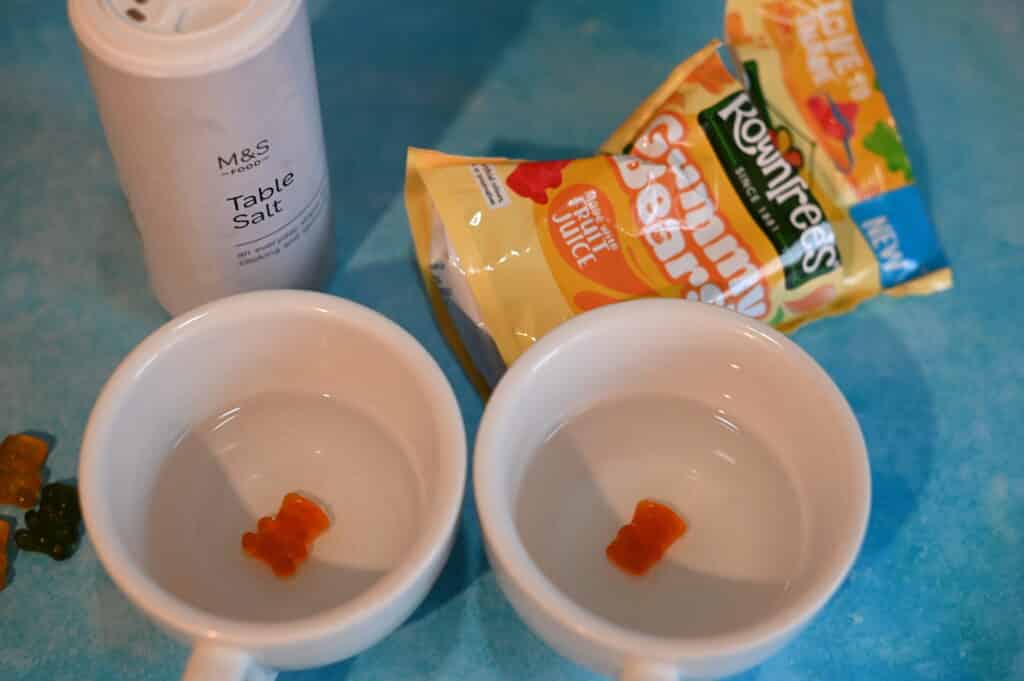
Half fill both containers with plain water.
Add salt to the second container until it’s hard to dissolve any more.
Freshwater fish
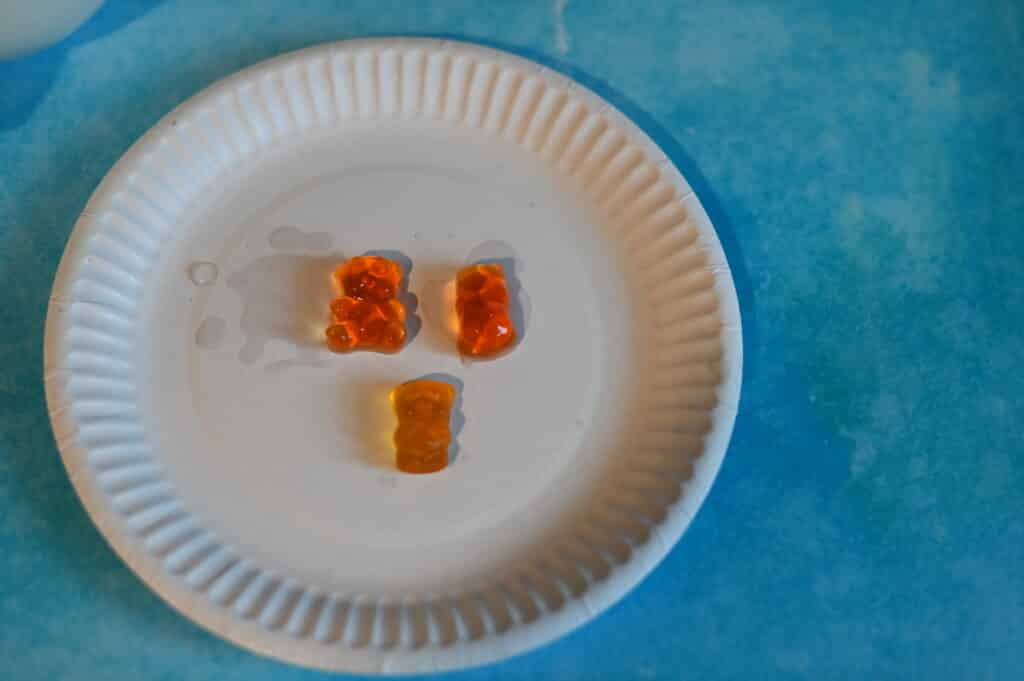
Place a gummy bear in the plain water container for a few hours. It should increase in size.
The concentration of water in the container is higher than the concentration of water inside the gummy bear, so water moves from the container into the bear by osmosis.
This is why fish living in freshwater don’t drink and have to excrete urine almost constantly. If they didn’t, they would swell up and maybe even burst!
Saltwater Fish
Carefully place the swollen gummy bear in the salty water and leave for a few hours. This time, you should find the gummy bear shrinks.
If you made the water salty enough, the concentration of water inside the bear should be higher than that of the salty water, and so water moves from the bear into the water, making the bear shrink.
Saltwater fish have to drink constantly, as water is continually moving out of their body into the salty ocean.
Summary
Freshwater
Freshwater has a low salt concentration, so water moves into the gummy bear.
Fish in freshwater are constantly taking in water, so they don’t drink and have to excrete the water constantly.
Saltwater
Saltwater has a high salt concentration, so water moves out of the swollen gummy bear.
Fish in salt water are constantly losing water to the sea. They drink constantly, and their gills pump out excess salt.
Last Updated on June 14, 2026 by Emma Vanstone
The post Do fish feel thirsty? appeared first on Science Experiments for Kids.
Science Experiments for Kids Read More