
 Written by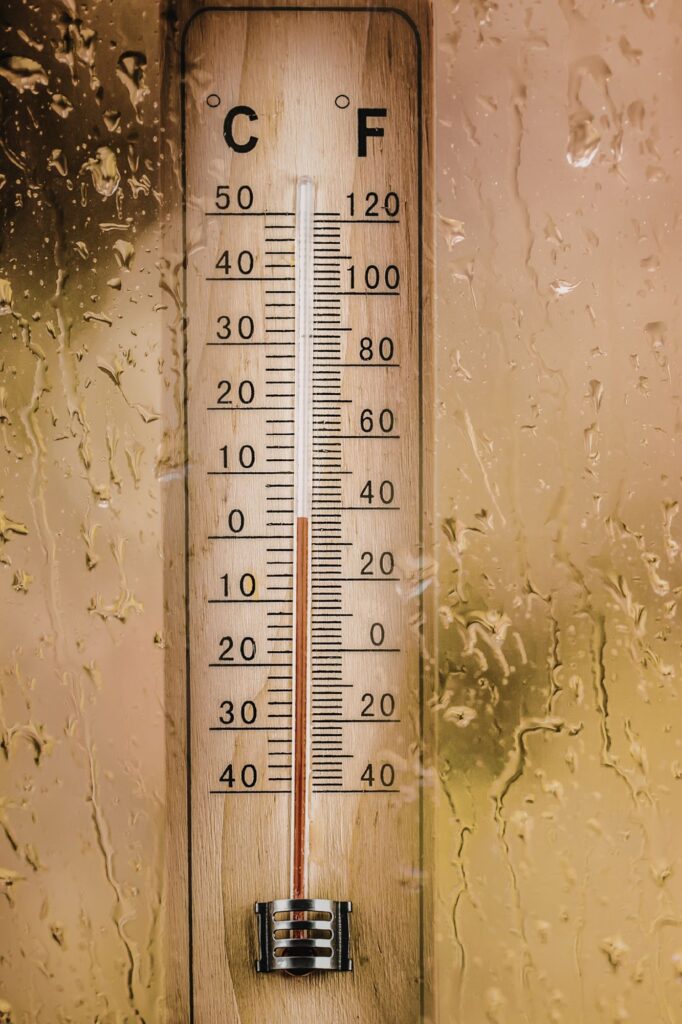
At what temperature are Fahrenheit and Celsius equal?
When checking what to pack for a holiday, you need to know whether the temperature is in Celsius or Fahrenheit. 40°F is winter coat weather, but 40 °C is a very hot day!
Celsius and Fahrenheit are both temperature scales, it’s a bit like measuring the same thing with two rulers, but starting with one at 0 and one at 32. You’d get a completely different measurement.
The difference between the two is down to the people who invented the scales. Anders Celsius based his scale on pure water ( 0-100 ), and Daniel Fahrenheit based his on the coldest temperature he could create in his lab and human body temperature.
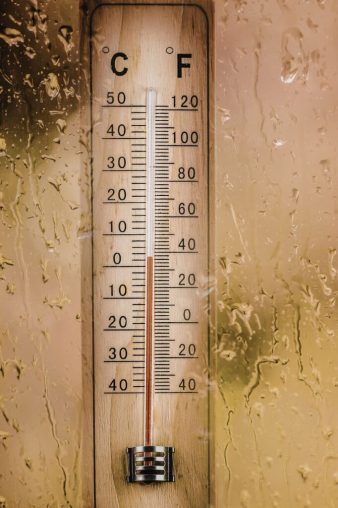
The same number in Celsius and Fahrenheit varies a lot, until you get to the magic -40°, which is the same in both!
Who invented the Celsius Temperature Scale?
The Celsius temperature scale was invented by Anders Celsius, a Swedish astronomer, in 1742. Although his version is actually the opposite of what we use today. He set 100° as the freezing point of water and 0° as the boiling point, which avoided the use of negative numbers for very cold temperatures. After Anders Celsius passed away, Carl Linnaeus switched it to make 0° the freezing point of water, which is the Celsius scale we use today!
Who invented the Fahrenheit Temperature Scale?
The Fahrenheit scale was invented in 1724 by a German physicist called Daniel Gabriel Fahrenheit.
Daniel Fahrenheit was the first person to use mercury in a thermometer. He realised that mercury was better than water or alcohol, which had previously been used, because it didn’t freeze as easily and expanded smoothly.
Fahrenheit wanted zero degrees to be the coldest temperature he could create in his lab. He mixed water, ice, and ammonium chloride (a type of salt) and set the point on his thermometer where the mercury dropped to zero. He decided the freezing point of water should be 32°F, then took the temperature of his wife’s armpit and rounded it to 96° (this was later changed to 98.6°F, which is human body temperature).
How do you convert Celsius to Fahrenheit?
The formula for converting Celsius to Fahrenheit is:
Fahrenheit = ( Celsius x 1.8 ) + 32
Or, use our handy calculator!
Convert between Fahrenheit and Celsius
°F
°C
Fun Temperature STEM Challenge
Daniel Fahrenheit used ammonium chloride, water and ice to create very cold slushy water in his lab. When ammonium chloride is dissolved in water, it absorbs heat from its surroundings, which makes the water colder than before it was added. This is an endothermic process.
The ammonium chloride particles also get in the way of water molecules, making it harder for them to bond and form ice. This further lowers the freezing point of water. Lowering the freezing point forces the ice to melt. To melt, it must draw heat from its surroundings, which further lowers the water temperature, pushing it well below its normal freezing point without turning into ice.
You can recreate this at home using normal cooking salt instead of ammonium chloride.
Ice and Salt STEM Challenge
You’ll need
- A bowl
- Water
- Ice
- Salt
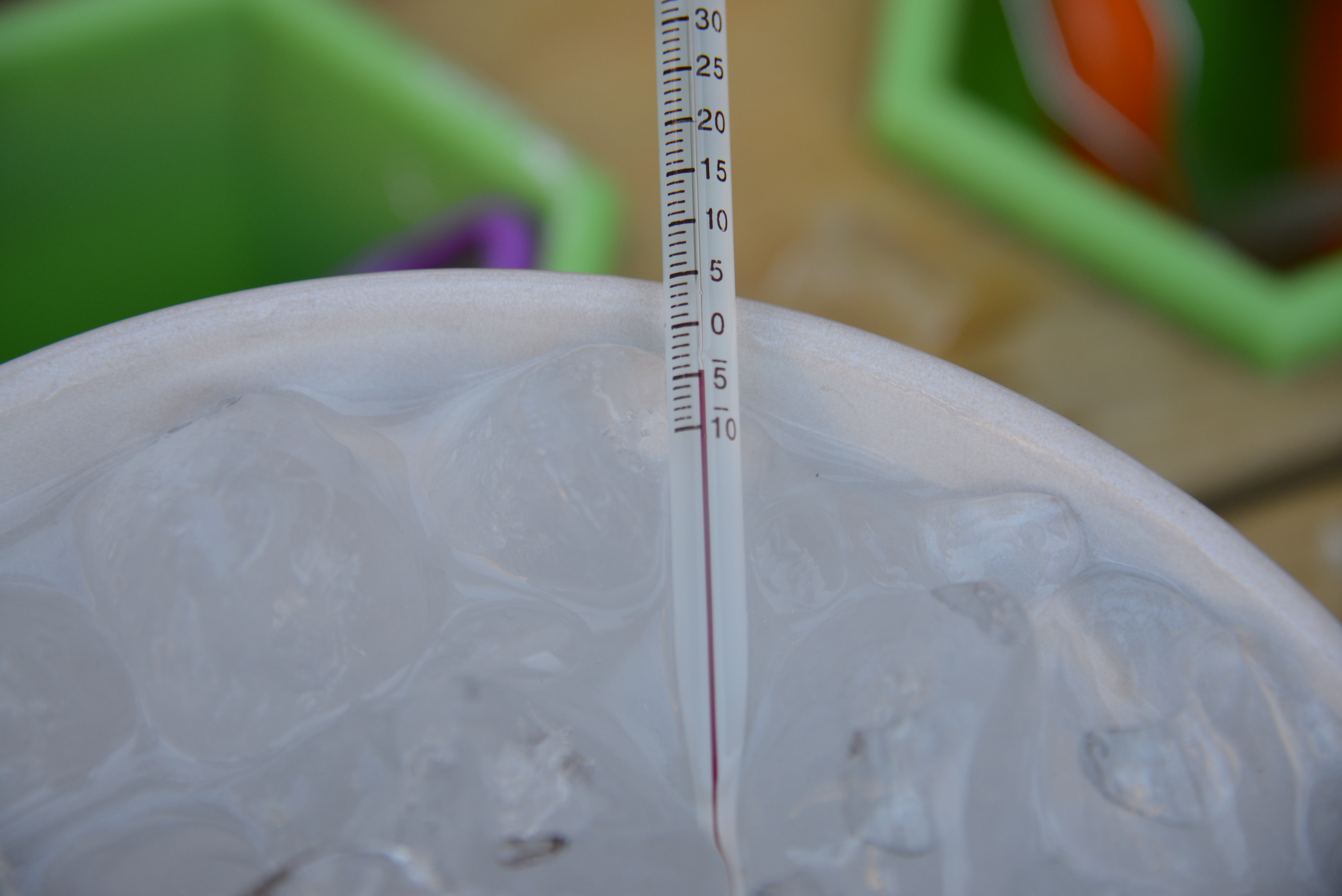
- Thermometer
Instructions
- Half fill the bowl with water and record the temperature.
- Add a cup of ice, wait 2 minutes and record the temperature again.
- Add a tablespoon of salt to the water, stir and record the temperature after a couple of minutes.
- Keep adding ice and salt until you can’t get the temperature any lower.
Extra Challenge
This time, use a smaller container that you can insulate to keep it as cold as possible. Can you get the liquid to reach a lower temperature than without insulation?
Another fun ( and tasty way ) to demonstrate freezing point depression is to make ice cream in a bag.
Last Updated on May 18, 2026 by Emma Vanstone
The post Fahrenheit, Celsius and a STEM Challenge appeared first on Science Experiments for Kids.
Science Experiments for Kids Read More