
 Written by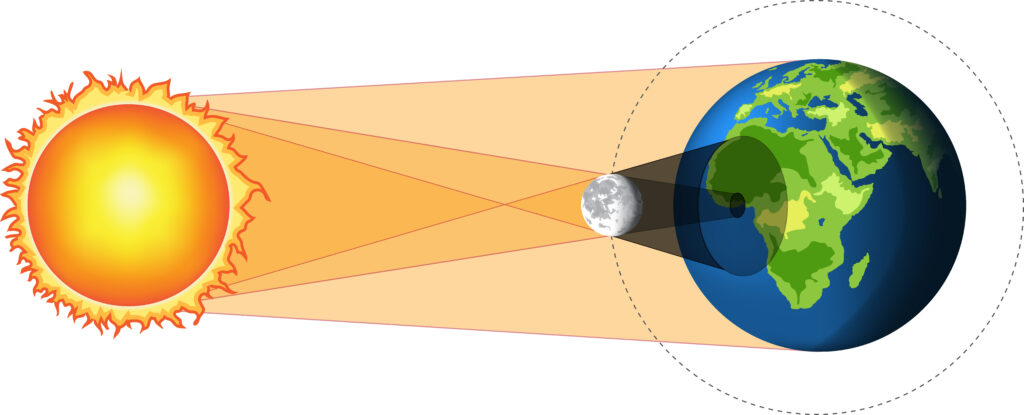
A solar eclipse is when the Moon passes between the Sun and Earth, blocking the sun’s light. People on Earth who are in the path of the moon’s shadow will be able to see the eclipse. The Sun is 400 times wider than the moon and 400 times farther away, which is why they appear … Continue reading “Solar Eclipse Resources”

Spring is a great time of year to learn about minibeasts and their life cycles. Minibeasts are fascinating creatures you’ve probably seen in the garden, parks and maybe even indoors! Minibeasts have incredible life cycles, sometimes transforming completely between stages. What are minibeasts? Minibeasts are basically small invertebrate ( without a backbone ) animals. Examples … Continue reading “Fun ways to learn about minibeast life cycles”

This activity is a fun twist on the traditional lemon dropping into a glass inertia demonstration. It’s a simple science trick that works well with a small chocolate egg. Don’t forget to take a look at my Easter STEM challenges, too! You’ll need Small chocolate egg Cardboard tube or card rolled into a tube shape. … Continue reading “Falling Chocolate Egg Challenge”

Easter is fast approaching, so it seems like the perfect time to try some of our Easter STEM Challenges! We’ve been busy testing these for you over the last couple of weeks and would LOVE to see the creations of your little scientists, so do share photos with us on Facebook, Instagram or Twitter. I’ve … Continue reading “Awesome Easter STEM Challenges”
This simple science experiment and demonstration is a great way to show children what happens to gases when they are heated. The air around us is an example of a gas. Particles in a gas can move freely in any direction. Gases don’t have a fixed shape but fill the space they have. When a … Continue reading “Blow Up a Balloon with Warm Air Science Experiment”
This simple science experiment and demonstration is a great way to show children what happens to gases when they are heated. The air around us is an example of a gas. Particles in a gas can move freely in any direction. Gases don’t have a fixed shape but fill the space they have. When a … Continue reading “Blow Up a Balloon with Warm Air Science Experiment”
This simple science experiment and demonstration is a great way to show children what happens to gases when they are heated. The air around us is an example of a gas. Particles in a gas can move freely in any direction. Gases don’t have a fixed shape but fill the space they have. When a … Continue reading “Blow Up a Balloon with Warm Air Science Experiment”
This simple science experiment and demonstration is a great way to show children what happens to gases when they are heated. The air around us is an example of a gas. Particles in a gas can move freely in any direction. Gases don’t have a fixed shape but fill the space they have. When a … Continue reading “Blow Up a Balloon with Warm Air Science Experiment”
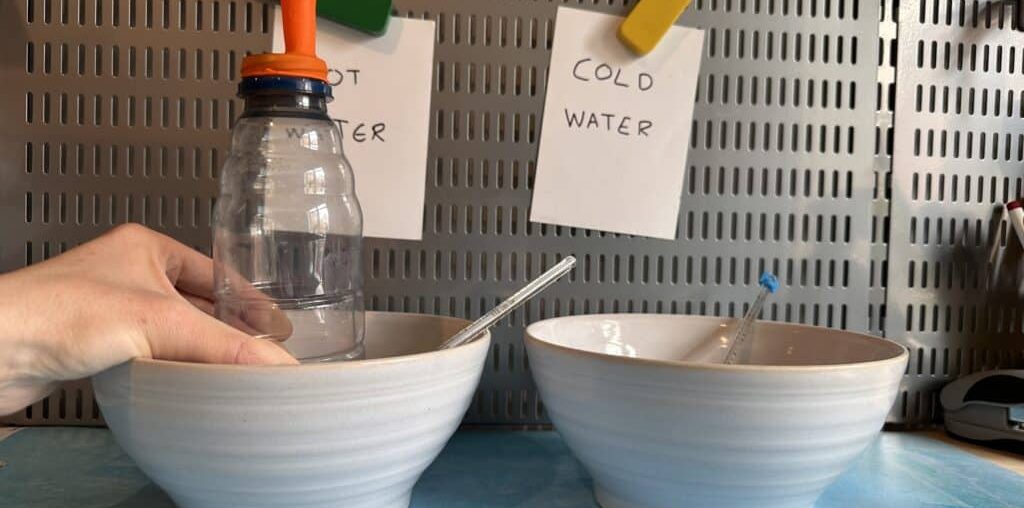
This simple science experiment and demonstration is a great way to show children what happens to gases when they are heated. The air around us is an example of a gas. Particles in a gas can move freely in any direction. Gases don’t have a fixed shape but fill the space they have. When a … Continue reading “Blow Up a Balloon with Warm Air Science Experiment”
Pi is the ratio between a circle’s circumference and diameter. It’s a number used in many formulas associated with circles. The circumference is the distance around the edge of a circle Pi to two decimal places is 3.14. The symbol for Pi was first introduced by a Welsh mathematician called William Jones in 1706. Pi … Continue reading “Pi Day! What is Pi?”